The answer path
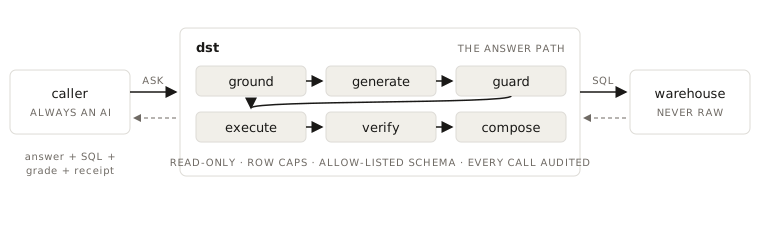
The answer path is everything that happens between a question and the number that comes back. dst owns all of it, so the caller never touches the warehouse:
caller ──▶ dst ──▶ warehouse
agents      lens · context        read-only,
analysts    certified patterns  guarded SQL
apps        receipts · refusal
The stages, in order:
- Ground. The question is scoped to one lens, which selects the semantic files, governed definitions and curated context the model may read. When the caller names no lens, a routing step picks one first, or declines.
- Match. If a certified answer covers the question, its approved SQL is served verbatim and generation is skipped.
- Check, then generate. Before generation runs, deterministic code clarifies or refuses — an ambiguous governed term, a metric this lens leaves out. Then the SQL is produced: with a typed-decision provider, every slot of the answer is decided over the semantic model and the SQL is compiled from the decisions; otherwise the model writes SQL against that curated context.
- Guard. The SQL is parsed and checked before it runs: single-statement and read-only, inside the lens's scope.
- Execute against the warehouse, row-capped at execution. The connection itself is opened read-only where the driver supports it (DuckDB, Postgres, MySQL); on BigQuery and Snowflake the guard and the credential's own grants carry it.
- Compose and verify. The prose is written, then the whole answer is graded and returned with the SQL, the confidence grade, and a receipt.
Because every question travels the same path, access, cost, scope and correctness are enforceable in one place. The alternative is giving the model warehouse credentials and letting it author its own SQL: a wrong definition that a person would quietly catch then gets repeated across a thousand decisions at machine speed, and nobody learns the answer was wrong until something downstream breaks. Describing the data better informs that model; it does not limit what its credentials can run.